




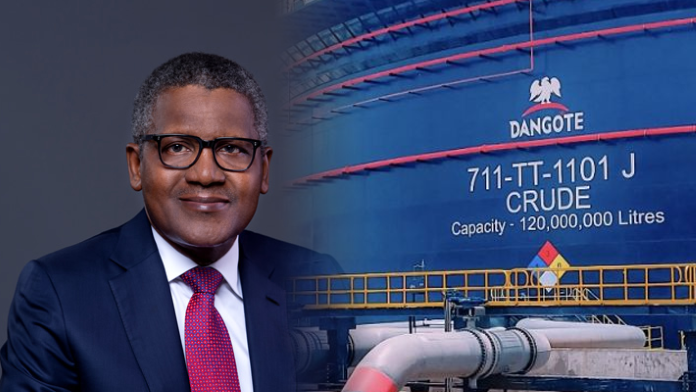
Forbes valued Aliko Dangote at $51.3 billion on September 14, while Bloomberg’s Billionaires Index carried him at $35.3 billion. Much of the difference comes from one asset: his refinery.
Until now, the business has had no traded market price. That could change in November, when the shares are expected to begin trading on the Nigerian Exchange.
The public offer opened on September 14 and closes on October 13. It is not yet a listing. The refinery is offering 4.1 billion new shares at N525 each to raise about N2.15 trillion.
If the base offer is fully allotted, the enlarged company would have about 124.23 billion shares, giving it a valuation of roughly N65.22 trillion, or about $49 billion using the exchange rate cited in reporting on the prospectus.
The eventual market price could therefore have a significant effect on how Dangote’s fortune is calculated, particularly because the two major wealth trackers currently use very different approaches to valuing the refinery.
Why the trackers disagree
Forbes and Bloomberg have used different approaches to valuing the refinery while the business was private and had no traded market price. A $2.5 billion private placement completed in July provided a market-based reference point.
The transaction attracted about $3.7 billion in investor demand but resulted in approximately $2.5 billion of new equity being issued, with the balance returned or left unallocated. Forbes said the transaction implied a refinery valuation of about $42 billion and pushed Dangote’s fortune above $50 billion.
Bloomberg has taken a different route. Its Billionaires Index values the refinery at roughly its $20 billion construction cost and credits Dangote with a 92.3% stake. That leaves his refinery holding carried at about $18.5 billion. Bloomberg has calculated that valuing the refinery at the IPO price could take Dangote’s fortune to about $58.2 billion.
The difference therefore largely reflects how the two trackers value the refinery and the ownership stake they attribute to Dangote.
Read Also: From Diesel to Banking: How Femi Otedola Built His $2 Billion Fortune
The arithmetic of a first day
The prospectus, as reported by Billionaires.Africa, puts Dangote’s beneficial interest at 104.83 billion shares, or 87.27% of the 120.13 billion shares in issue before the IPO. The offer is a primary issue, so Dangote’s existing share count does not change, although his ownership percentage will fall as new shares are issued.
At the implied July placement price of about $0.35 a share, that stake would be worth roughly $36.7 billion. At the N525 IPO offer price, it is worth about $41.6 billion, a difference of roughly $5 billion.
On that calculation, if the refinery eventually traded at N525, Forbes’ reported fortune could rise by roughly that amount, potentially taking Dangote’s wealth to around $56 billion. Bloomberg’s methodology would produce a much larger increase because of the much lower value it currently assigns to the refinery, taking its reported projection to about $58.2 billion.
These are calculations based on the disclosed shareholding and exchange rate, rather than wealth figures independently calculated by Forbes or Bloomberg.
The theoretical price at which the refinery stake would retain the same dollar value implied by Forbes’ current valuation is about N463 per share. That is roughly 12% below the N525 offer price.
At N420, representing a 20% discount to the offer price, Dangote’s refinery stake would be worth roughly $33.3 billion on this calculation, about $3.4 billion below the value implied by the July placement price. At N577.50, a 10% premium to the offer price, the stake would be worth roughly $45.7 billion.
Every 10% movement in the refinery’s share price would change the dollar value of Dangote’s disclosed stake by roughly $4.2 billion, assuming the same exchange rate and shareholding.
Dangote’s bigger ambition
Dangote has voiced much higher expectations for the shares. Asked about a possible rise toward N10,000, he said he prayed it would happen and said the shares could reach that level depending on market conditions.
For scale, a share price of N1,000, less than twice the IPO price, would put his disclosed refinery stake at roughly $79 billion at the exchange rate used in the calculation.
That is an illustration rather than a forecast. The actual value will depend on the price investors establish once the shares begin trading.
Two other variables will also matter.
The naira. The refinery stake is denominated in naira once its shares trade locally, while the wealth figures are reported in dollars. A 10% weakening of the naira from N1,323.55 to the dollar would reduce the dollar value of a given naira share price by roughly 9%, assuming nothing else changes.
The wealth trackers’ methodologies. Forbes’ real-time ranking uses market prices for publicly traded holdings, while private assets are treated differently. Once the refinery becomes publicly traded, its market price should provide a more observable reference point for one of Dangote’s biggest assets.
What could push the price around
Several factors could influence where the shares settle once trading begins, from investor demand and the size of the public float to the refinery’s earnings and the incentives attached to the offer.
- Demand. The IPO is open to retail, institutional and eligible African investors, with a minimum subscription of 10 shares, or N5,250. The final level of subscriptions will only be known when the offer closes on October 13.
- A thin public float. The base offer represents about 3.3% of the refinery’s enlarged share capital. A relatively small public float can leave a stock more sensitive to changes in buying and selling pressure once trading begins.
- Incentives to hold. The offer includes a proposed retail incentive under which qualifying investors who maintain their holdings for the required period could receive additional shares, subject to the terms and applicable approvals.
- Earnings. The refinery reported a $1.82 billion after-tax profit in the first half of 2026, compared with a $476 million loss for all of 2025. Reuters reported that the refinery benefited from disruptions to Middle Eastern fuel supplies, which helped support refining margins and demand for its exports.
If those market conditions change, the earnings investors use to assess the refinery’s valuation could also change.
- The premium to cost. The IPO values the refinery at roughly $49 billion using the exchange rate in the prospectus, well above the approximately $20 billion it cost to build. Investors buying at N525 are therefore paying for the business’s future earnings, expansion plans and growth potential rather than simply the historical cost of construction.
What to watch
The first key date is October 13, when the public offer closes and the final subscription level should become known. The allotment process follows, with the final listing date still to be confirmed by the company and regulators.
Reuters has reported that trading is expected to begin in late November. Until then, N525 remains an offer price, not a market price.
Once the shares begin trading, Aliko Dangote’s refinery stake will have a price determined by buyers and sellers in the market. That price could move his reported fortune substantially in either direction, while also giving Forbes and Bloomberg a more observable basis for valuing one of his biggest assets.