



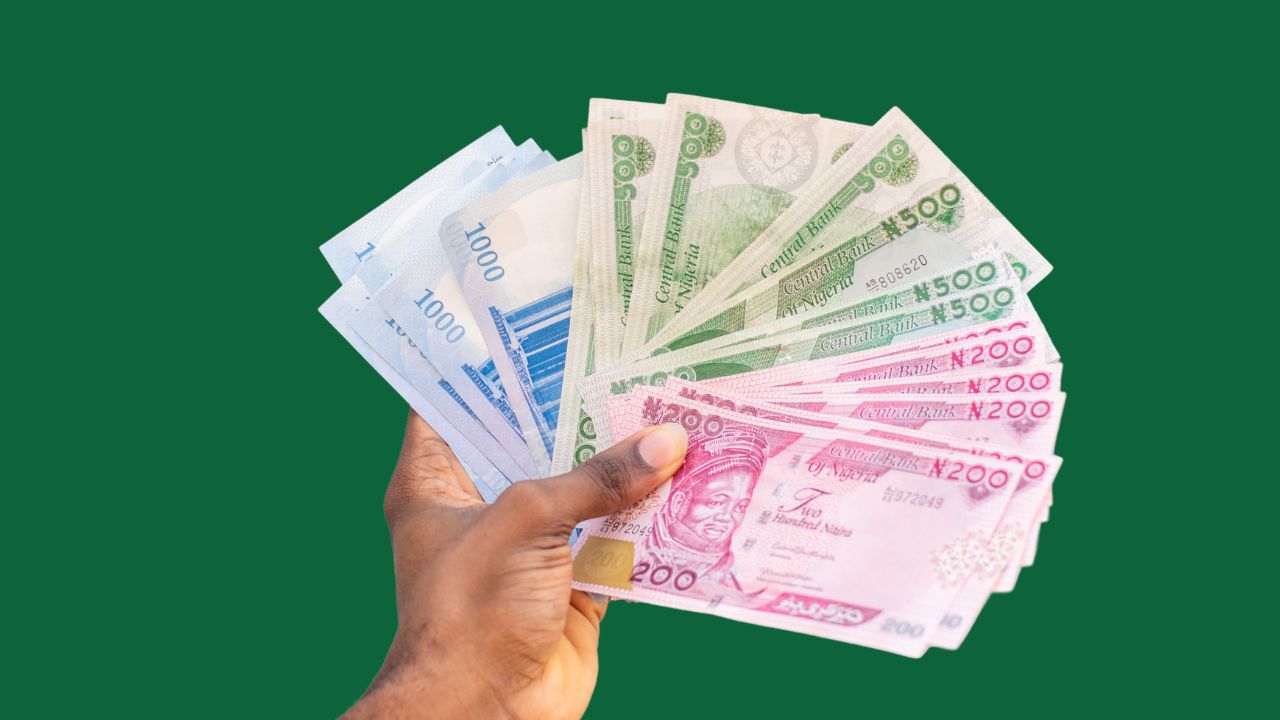
The Nigerian naira note, just as the British Pound, the American Dollar, and most other currencies around the world, bear the images of great individuals, politicians, economists, statesmen, and ordinary citizens who are significant to the history of those countries. The Nigerian naira notes bear the faces of Abubakar Tafawa Balewa, Dr. Alvan Ikoku, Sir Ahmadu Bello, Chief Obafemi Awolowo, Dr. Hadiza Ladi Kwali, Murtala Mohammed, Nnamdi Azikiwe, Clement Isong, and Mallam Aliyu Mai-Bornu.
Although the Central Bank of Nigeria (CBN) insists that the 50 Kobo, 1 Naira, and 2 Naira coins are still in circulation, they are pretty much non-existent. On the obverse (front side) of the 1 Naira coin is the coat of arms, while on the reverse is Sir Herbert Macaulay. The 2 naira coin has the images of the Nigerian coat of arms and the National Assembly, while the 50 Kobo, which is officially the lowest denomination in the country, also has the images of the Nigerian coat of arms and maize.
All The Faces on Nigerian Naira Notes
1. 5 Naira Note: Sir Abubakar Tafawa Balewa
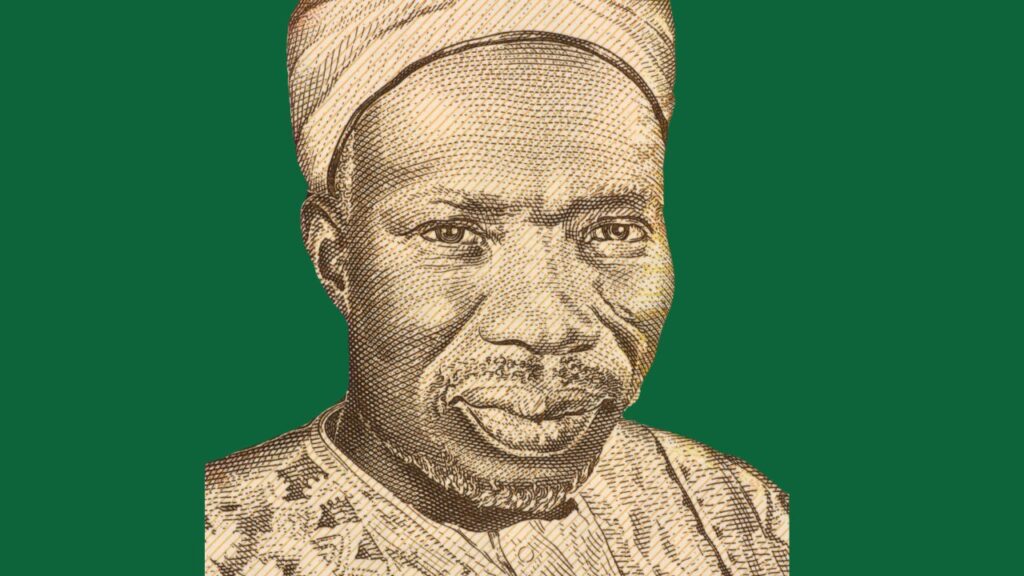
The five Naira note is the lowest denomination in Nigeria that is still in circulation. The currency has the face of Sir Abubakar Tafawa Balewa, Nigeria’s first Prime Minister.
Tafawa Balewa was born in December 1912 in Bauchi State, and he died on January 15, 1966.
Although the 5 naira was first introduced in 1973, it was not until 1979 that it was redesigned to carry the face of the country’s first prime minister. From 1973 to 1979, the currency did not bear the face of any Nigerian citizen.
The currency changed again in 1984 and then in 2007, still maintaining the face of Sir Abubakar Tafawa Balewa.
The other side of the 5 Naira has the Mkpokiti (Nkpokiti) Dance Group, a cultural group founded by Chief Festus Okoli. The group won many competitions and was adopted by the Anambra state government as the official state dance group. The Nigerian government also adopted the group as the country’s official dance group. The group represented Nigeria at various international events.
2. 10 Naira: Dr. Alvan Ikoku
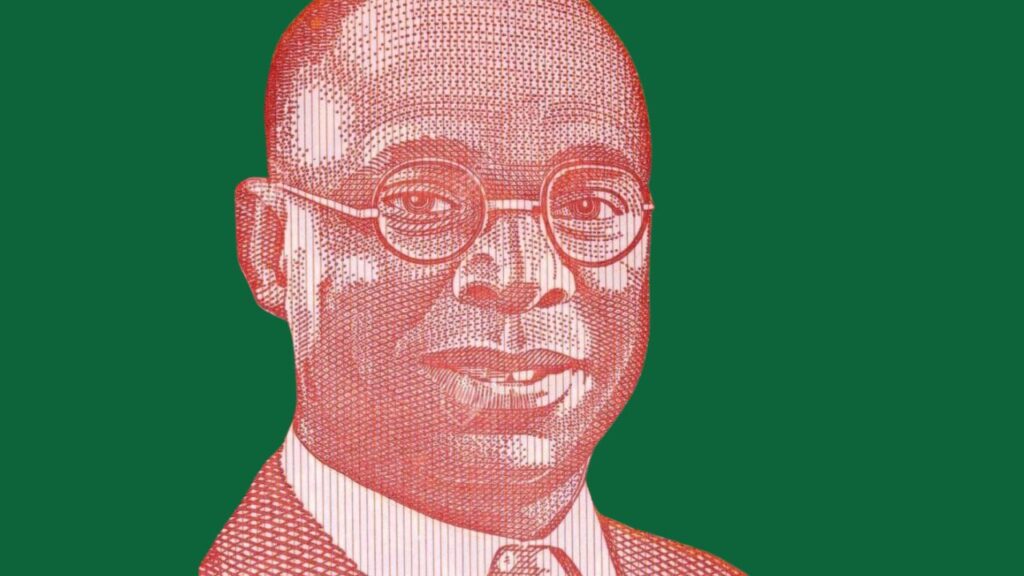
The Nigerian 10 Naira note has the face of politician and educator, Alvan Ikoku. The note was introduced in 1973 to replace the British pound and shilling. At the time, N10 was the highest denomination.
The 10 Naira note first came into existence in 1979, bearing the face of Dr. Alvin Ikoku, who was born in 1900 in Abia state, and he died in 1971.
It went through various changes, including in 1984 and 2007 when the colors changed, but the currency still maintained the face of Dr. Ikoku.
The back of the N10 has three Fulani milkmaids, a group from northern Nigeria.
3. 20 Naira Note: Murtala Mohammed
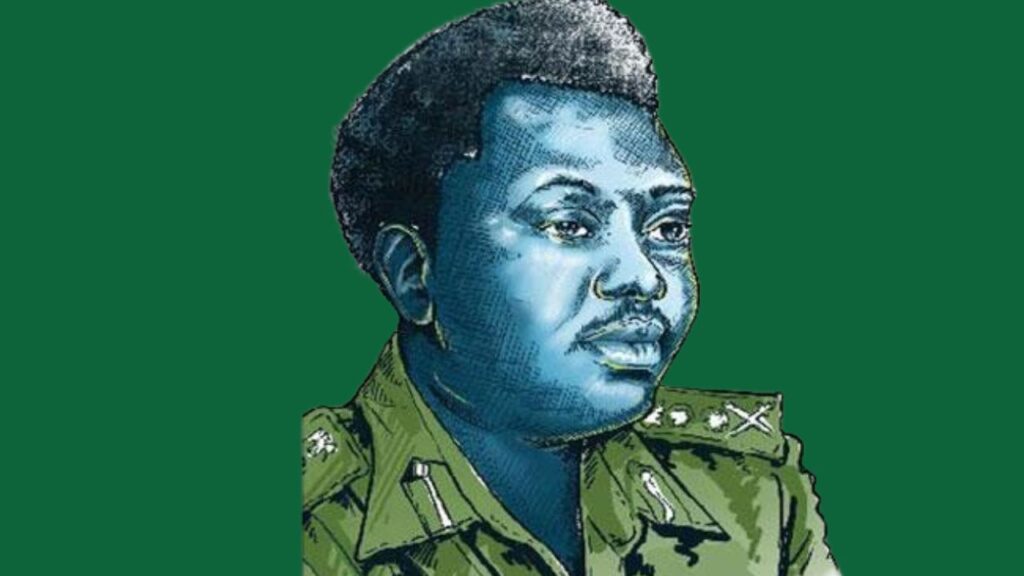
In 1977, when the 20 Naira bill was first introduced, it bore, and still bears, the face of General Murtala Mohammed, who was Nigeria’s head of state from 1975 to 1976.
Murtala Mohammed was born on November 8, 1938, in Kano state, and he died on February 13, 1976, following a military coup. He became the first Nigerian national hero to appear on the country’s currency.
Like others, the note was redesigned in 1984 and 2005, but its face continued to sustain.
The back of the 20 naira note does not carry the face of Queen Amina of Zazzau, as erroneously believed. It bears the portrait of celebrated Nigerian potter, Dr. Hadiza Ladi Kwali.
4. The 50 Naira Note
Unlike all other currencies in Nigeria, the 50 naira note is the only one that does not carry the face or portrait of a national hero. Instead, it has a picture depicting the diversity of Nigeria.
First introduced in 1991, the 50 Naira bears an image that depicts the major tribes in Nigeria: the Hausa, Igbo, and Yoruba, with four men representing the tribes. It is referred to as Wazobia, a word that, when broken, means “come” in Yoruba (Wa), Hausa (Zo), and Igbo (Bia). It was redesigned in 2007.
The back of the bill has an image of 3 fishermen holding their giant catch.
5. 100 Naira: Chief Obafemi Awolowo
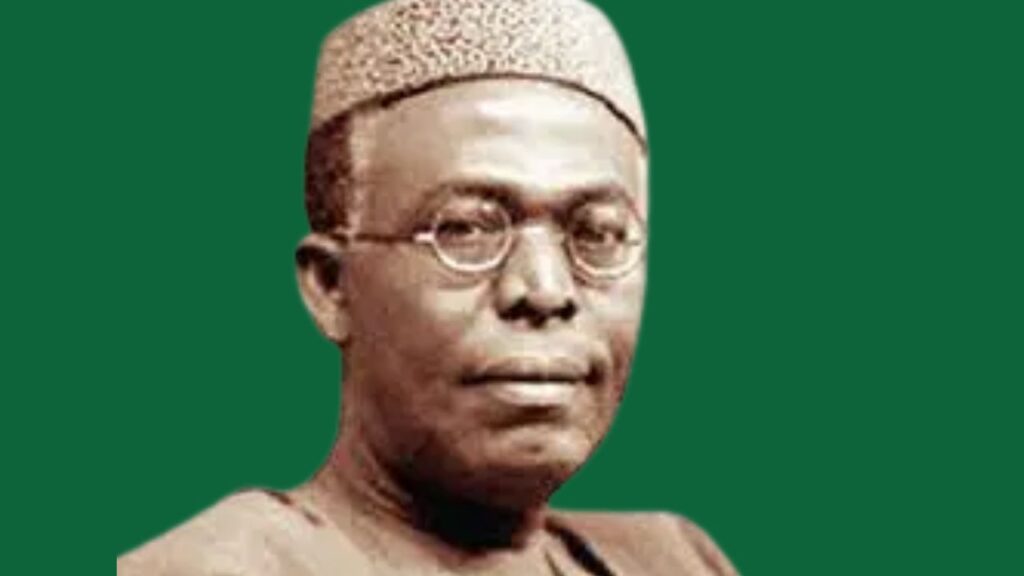
The Nigerian 100 Naira bill was introduced in 1999, bearing the portrait of the first Western Premier of the Western Region, Chief Obafemi Awolowo. Awo was born in Ikenne, Ogun State, on March 6, 1909, and he died on May 9, 1987. He was born in Ikenne, Ogun State.
While the Nigerian nationalist is on the front side of the N100, the back has the image of the iconic Zuma rock, which is in the country’s capital, Abuja.
6. 200 Naira: Sir Ahmadu Bello
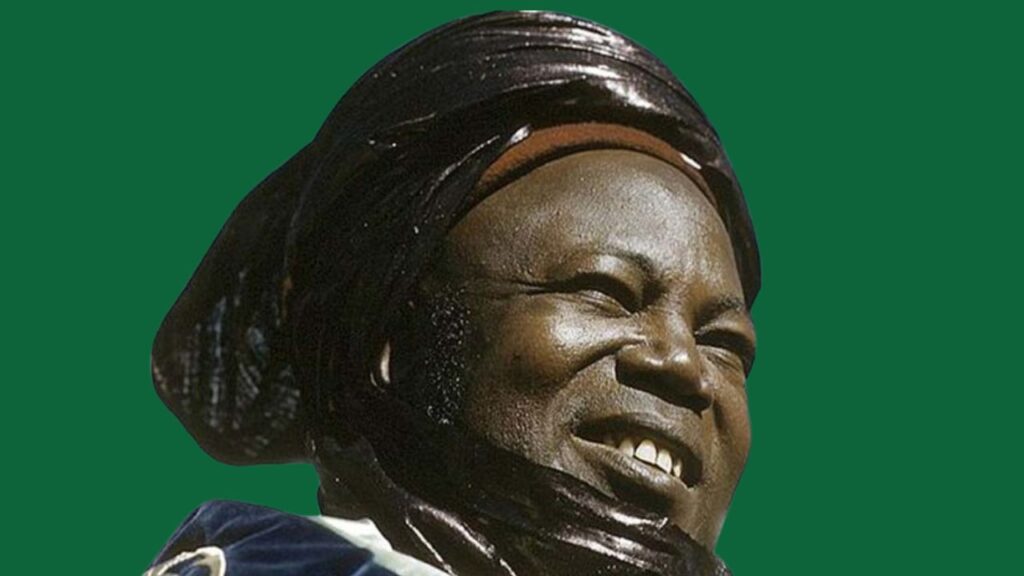
The Nigerian 200 Naira bill has the portrait of one of the country’s pre-independence heroes, Sir Ahmadu Bello. He was the first premier of Northern Nigeria. Ahmadu Bello was born on June 12, 1910, and he died on January 15, 1966.
The currency was first introduced in 2000, and since then, the face of Sir Ahmadu Bello has been on the obverse of the banknote.
On the back or reverse of the note is an image depicting the agricultural prowess of Nigeria. The image depicts the groundnut pyramid, other agro commodities, and livestock.
7. 500 Naira: Nnamdi Azikwe
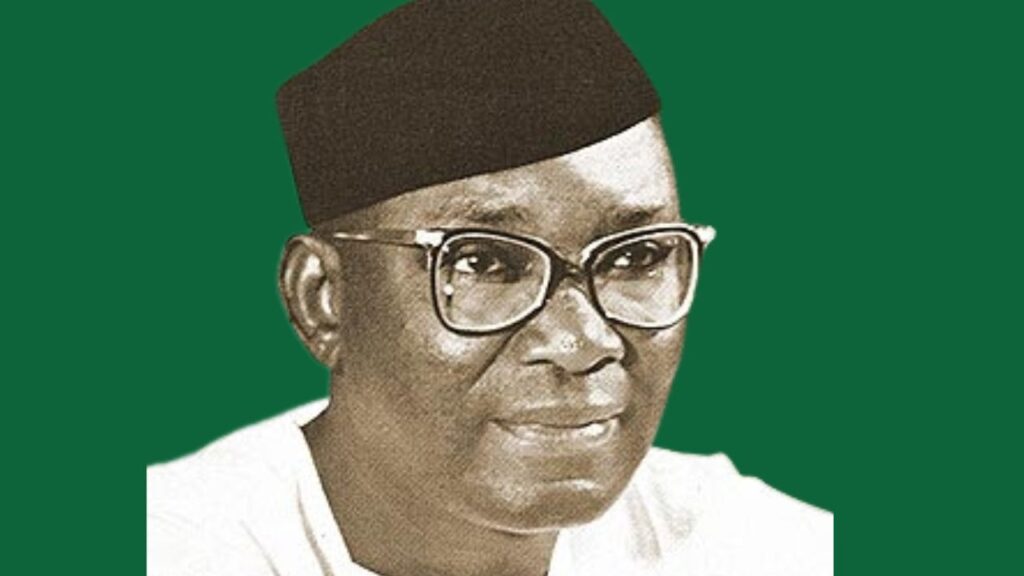
The obverse of the 500 naira note has the image of one of the most important pan-Africanists and the country’s first president, Nnamdi Azikiwe, popularly referred to as Zik of Africa. He was Nigeria’s president from 1963 to 1966.
Closely following the 100 and 200 naira notes, the 500 Naira note was introduced in 2005, and since then, it has always borne the face of Nnamdi Azikiwe, who was born on November 16, 1904, and he died on May 11, 1996.
The reverse side of the 500 naira denomination features an offshore oil rig.
See Also: 10 African Countries To Make Money
8. 1000 Naira: Clement Isong and Mallam Aliyu Mai-Bornu
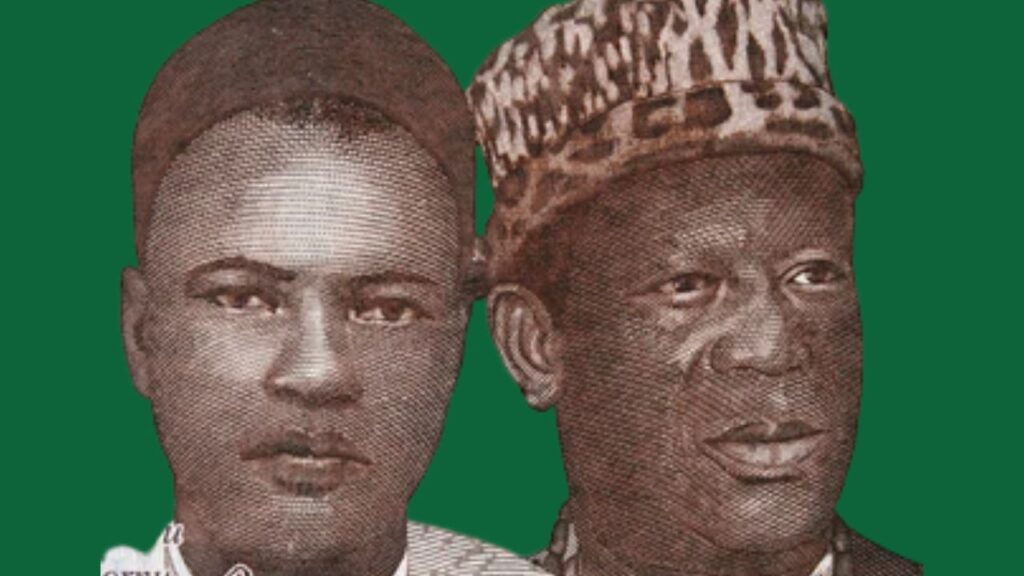
Currently, the highest denomination in Nigeria, the 1000 naira bill, was introduced in October 2005. It features the faces of two celebrated Nigerians, Clement Isong and Mallam Aliyu Mai-Bornu. The two men were the first two Nigerians to lead the CBN.
Mallam Aliyu Mai-Bornu was the first indigenous governor of the Central Bank of Nigeria, after taking over from Roy Fenton from 1958 to 1963. An Economist, Mallam Aliyu was born on February 23, 1919, in Yola, Adamawa state. He passed away on February 23, 1970.
Born on April 20, 1920, Clement Isong was a banker and politician who became the second indigenous governor of the Central Bank of Nigeria from 1967 – 1975. He was later elected the governor of Cross River State. He died on May 29, 2000.
The reverse of the 1000 naira note features an image of the Central Bank of Nigeria, located in the FCT, Abuja