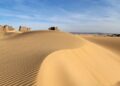




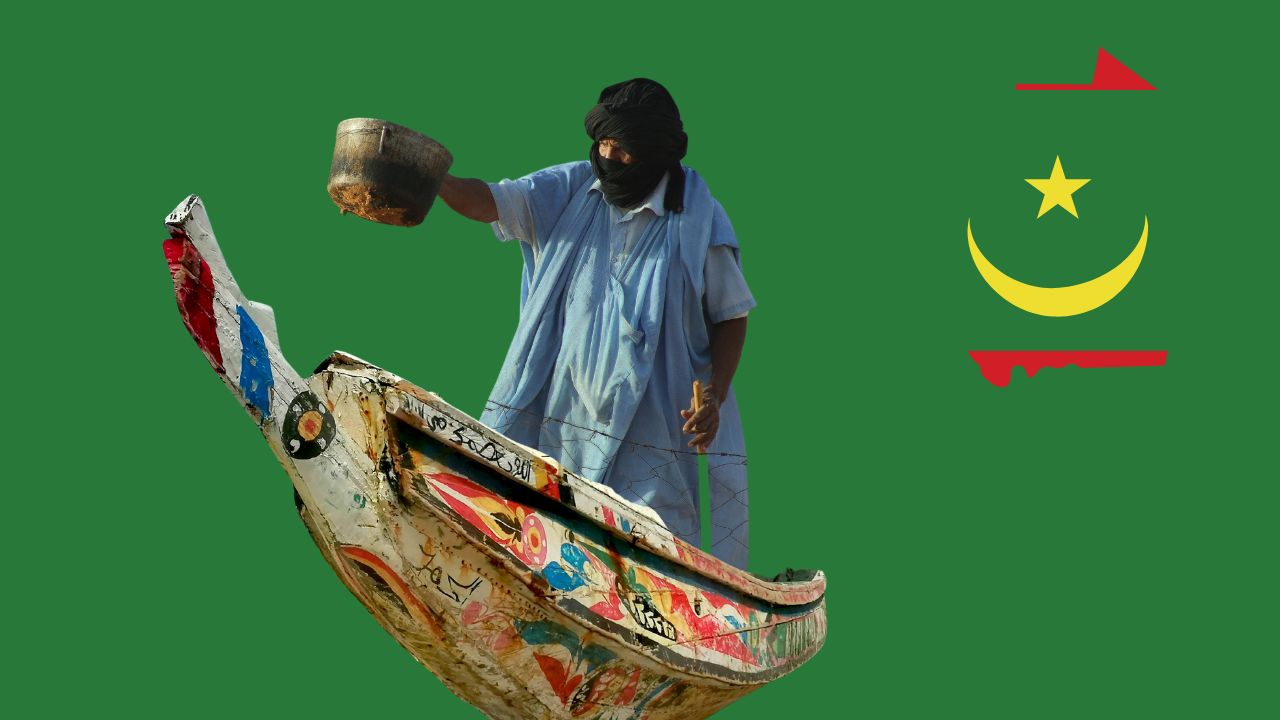
Mauritania is now officially known as the Islamic Republic of Mauritania. The Northwestern African country is the 11th largest country on the continent and the 28th in the world. With more than 90% of its territory situated in the Sahara, the country shares borders with Algeria and Senegal.
Despite the country’s huge reserves of resources, almost half of the population live below the extreme poverty line. The country’s harsh environment has forced many citizens to live in isolated communities where there are rigid social stereotypes and traditions.
Mauritania’s most notable tradition is the Leblouh tradition. This tradition states that girls of larger sizes symbolize prestige and wealth. To achieve this, girls under the age of 8 are forced to gain weight.
Here are 10 Interesting Facts about the Islamic Republic of Mauritania
1. Individuals do not own land in the country
Apparently, lands are owned collectively by the community in Mauritania. The head of the community or clan is saddled with the responsibility of allocating and leasing communal land.
In an organized community, the land is controlled by aristocrats, so the lower classes would have to rent, borrow, or work on the land based on a system called sharecropping.
2. There’s a camp for fattening women in Mauritania
Obesity has been considered a sign of beauty for women in North-Western countries. While in other parts of the world, most women have slim and slender bodies, Mauritanians prefer their women to be very chubby. Also called the Leblouh culture, the women’s fattening tradition begins at a ripe young age for girls.
To the Mauritanians, being thin signifies inferiority and shame. In order to achieve the desired bigger sizes, the girls are forced to a large amount of food. It is also believed that body size makes them more attractive and desirable, which also heightens their likelihood of securing male suitors.
In some places, girls around the age of 5 are taken to a camp to be force-fed by elderly ladies. When there’s a shortage of food, mothers resort to adding chemicals that are used to fatten animals.
3. The Country has one of the largest bird sanctuaries in the world
If you find yourself in Mauritania and want to go birdwatching, the best place to go is the Parc National du Banc d’Arguin. The place is one of the largest bird sanctuaries in the world, and is popular, especially among bird lovers.
Besides being a UNESCO World Heritage site, the reserve harbors many migratory birds as well. In addition to that, the park features dunes, coastal swamps, small islands, and shallow coastal waters.
4. Mauritania is home to one of the world’s longest train lines
The world’s longest train line, the Iron Ore Train, is one of the world’s longest train lines. The train line measures about three kilometers from the port of Nouâdhibou to the iron ore at Zouérat.
The train has about three to four locomotives and a passenger carriage.
5. There are allegedly more than 90,000 slaves in the country
Being the last country in Africa to abolish slavery, there are reports that Mauritania still has about 90,000 slaves in the country to date. Reports say about 10% to 20% of the population still lives in slavery.
One of the major obstacles to ending slavery in Mauritania is said to be abject poverty. Opportunities for slaves to support themselves if freed are very limited. Often called slavery’s last stronghold, Mauritania reportedly has difficulty enforcing any laws in the country’s vast desert. Most people now believe slavery is part of the natural order of their society.
6. Food has social and psychological functions in the country
In Mauritania, people eat in groups from a bowl or calabash with the right hand since eating with the left hand is forbidden.
For these people, it is not acceptable to eat with or in the presence of one’s in-laws.
During festivities like Ramadan, men are expected to slaughter an animal based on the number of wives they have. Also, only circumcised adult men are allowed to slaughter animals.
According to their traditions, after every lunch and dinner, it is ideal that younger persons, women, or slaves serve small glasses of tea with sugar and mint. Their diet usually consists mostly of meat, millet, rice, fish, and sweet potatoes.
7. Two women count as one witness in an Islamic-run court in Mauritania
According to reports, women are demeaned in Mauritania. For instance, while a man counts as one man in an Islamic-run court, only two women can count as one witness.
Also, women’s importance is culturally recognized in the country, such that women are not supposed to perform any physical work because it is seen as degrading.
8. Marriage rites among the Mauritanians
In the Mauritanian culture, marriages are usually arranged. While there are lots of marriages between cousins, it is not permissible to marry someone with whom a person has shared breast milk.
Aside from that, couples are only allowed to divorce twice before the final one which is the final one. If the divorce is the fault of the man, the wife keeps the bride price.
When newlyweds welcome their first child, it is customary that the older members of the extended family, especially the grandmother and the aunts, take care of the child’s needs.
9. The male gender usually gets more Inheritance than their female counterparts
As part of their traditions, inheritance is based on Islamic law. When a relative dies, both the male and female relatives are entitled to an inheritance; however, that of the male relative is double that of the female’s.
Also, because a woman automatically joins her husband’s family, she is often pressured to renounce her inheritance, especially if it’s a piece of land.
10. Old people are buried without coffins in Mauritania
As part of their burial rites, Mauritanians bury old people without coffins. Only those who die from a contagious disease are cremated. Generally, corpses are washed seven times and then wrapped in white cloth before the burial.
After the burial, the guests do not turn back toward the graveyard.